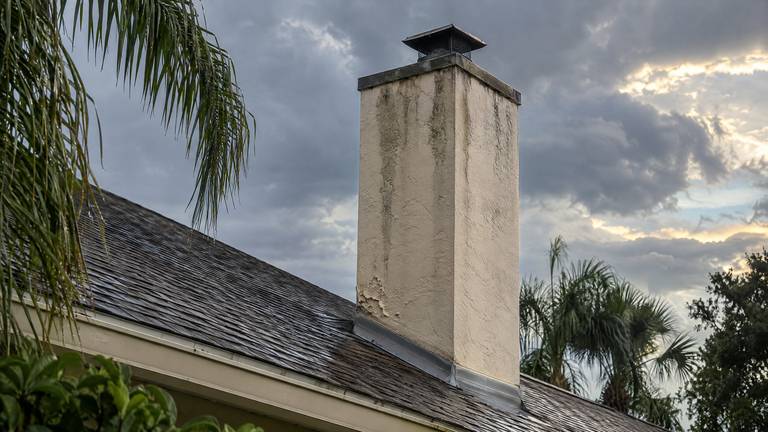
Find and repair chimney leaks in your Tampa home
Trace the water entry before choosing the repair, so the work addresses the cause rather than covering the stain.
- Family owned and operated
- Same-day service available
- No hidden fees
- Workmanship warranty
What Deserves a Closer Look
Rain at the fireplace, a damp ceiling or a stain down the chimney can point to different failures. Tampa Fireplace & Chimney starts with the path water may be taking, then proposes the repair supported by the findings. Our free inspection gives you a chance to explain when the problem appears. We distinguish a suspected cause from a confirmed defect and make remaining uncertainty clear.
- Water appearing at or beside the fireplace
- A ceiling stain that changes after rain
- Dampness below a chimney top
- Recurring marks after earlier sealing
- Rust-colored streaking near a metal enclosure
Contents
Start with the pattern of the chimney leak
The timing of a leak often provides a useful clue. Note whether water appears during rain, afterward or when the fireplace has not been used for some time. The place where you first see it matters too. These observations help focus the inspection without asking you to diagnose a roof-level component from indoors.
A water mark can remain after an older problem has stopped, while a small new stain may indicate an active issue. Tell us which changes are recent and what work has already been attempted. If several contractors have visited, bring their descriptions where available. Repeating an old treatment without knowing what it addressed can leave the real cause untouched.
Water can enter through more than one component
The top, exterior walls and roof junction form different parts of the weather enclosure. A damaged opening cover is not the same problem as a failed roof connection. Water may also travel behind a finish before emerging below. Chimney leak detection therefore considers the connected assembly rather than the stain alone.
Some chimneys have more than one defect. Repairing the most obvious one can be sensible, but the discussion should identify any other unresolved path. We explain whether the proposed work is expected to address the reported leak or whether another area still needs assessment. A promise that one treatment fixes every possible entry point would not be useful.
A leaking chimney repair should name the failed part
Once the relevant defect is identified, the repair can be specified for that component. It may involve the roof interface, damaged top construction, deteriorated joints or an enclosure cover. The recommendation describes the actual work instead of calling every option waterproofing. This makes it easier to compare a targeted repair with a broader proposal.
Component condition also determines whether repair or replacement is practical. A sound surrounding assembly may allow limited work. Extensive deterioration or an unsuitable previous detail may require a different approach. We explain why the selected intervention fits the condition rather than simply repeating the material used by the last contractor.
Sealants and coatings have limited jobs
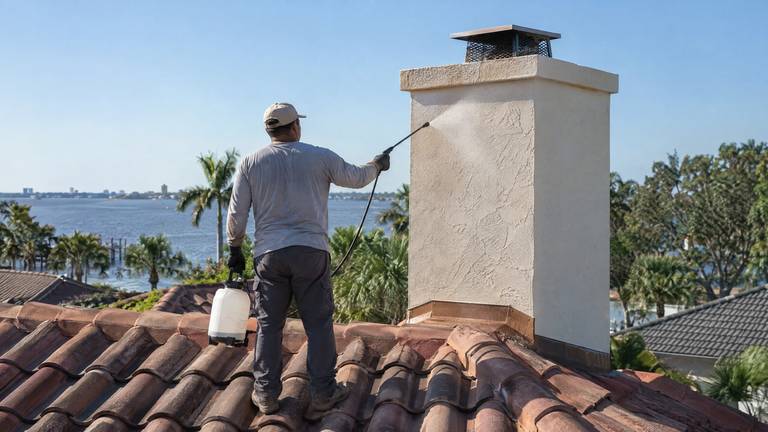
A compatible sealant belongs in an appropriate joint; a masonry treatment may reduce absorption in a suitable surface. Neither is a general replacement for missing or broken construction. We check whether the water path is one those materials can actually address. That prevents a coating being sold as a substitute for repairing a defective connection.
Chimney water leak repair may need physical work before any treatment is considered. A finish over an active opening can hide the condition while water finds another route. Where surface treatment is an option, its purpose and limitations are discussed separately. The homeowner can then decide on it without confusing appearance or water beading with proof that the whole leak has been resolved.
When water is leaking from a chimney chase
A framed chimney enclosure introduces a cover, exterior finish and concealed support around the venting system. Rust marks or damp siding can raise questions about those components, but the metal cover and the enclosure underneath need separate assessment. A fresh top does not repair deteriorated material below it. We identify any additional access needed to understand that condition.
Opening a chase is a larger step than replacing a visible cover. It can affect siding, trim and the sequence of exterior work. We discuss what is being investigated and which finishes would need reinstatement. Do not remove panels or climb onto the enclosure to locate the leak yourself.
Keep evidence available without creating a new hazard
If it is safe, note where water appears and when it changes. Move vulnerable belongings away from a damp area, but do not reach into a hot fireplace or climb onto a wet roof. Water near electrical equipment or an unstable ceiling needs appropriate immediate assistance. A routine chimney appointment should not replace help for an immediate danger.
Avoid lighting a fire to dry a wet or suspect chimney. Heat is not an assessment of the damaged condition. Keep the affected fireplace unused until the problem and any use restrictions are understood. Tell our team about both water entry and any operating symptom, even if they appeared at different times.
Coordinate the chimney leak fix with other repairs
A roofer, interior repair contractor or appliance technician may be involved in the same project. The order matters: address the relevant water entry and material condition before covering the evidence with new finishes. We explain the chimney portion of the work and what should be coordinated with another trade. That reduces confusion about which contractor is handling each connection.
An urgent weather measure can be useful without being the permanent repair. Keep the remaining work explicit:
- Confirm what the temporary protection is intended to do.
- Schedule permanent work when the roof conditions and access allow it.
- Address damaged surrounding material after the entry route is repaired.
- Keep the fireplace unused if an unresolved condition still limits operation.
Follow the result after chimney water leak repair
Keep the original symptom description and the completed-work information. If you notice a new mark, compare its location and timing with the original concern and contact the team. Concealed damp material and old staining can complicate the picture. We prefer a clear follow-up description to another unplanned coating over the repaired area.
Our family-owned Tampa team begins with a free inspection and an explanation of the available repair. You do not need to know whether the problem is called flashing, crown or cover damage before calling. Describe the chimney leaking as you see it, and we will discuss the assessment and a practical next step.
Make your first service go further
Get 10% off your first service. Start with a free inspection and choose the work your fireplace needs.
What's Included
What Goes Into Your Repair Plan
- Reported timing and location of the water
- Accessible top, outer surfaces and roof junction
- Evidence for the likely entry path
- Targeted component repairs
- Limits of concealed access and follow-up needs

Proudly American
A clear scope, an agreed price and workmanship we stand behind.
Our Services
Services for Connected Problems
-
-
-
-


Put That Fireplace Problem on the Schedule
Arrange your free inspection in Tampa. We will help you understand the problem and the work it needs.
Your request is confirmed
Our team will contact you to arrange the appointment.