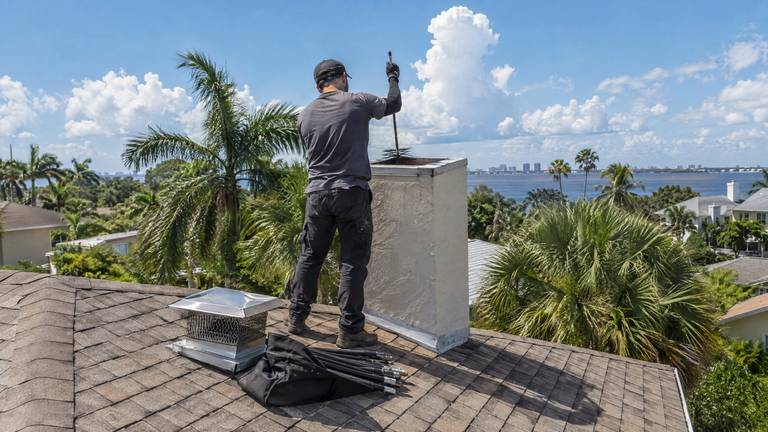
Creosote removal for affected Tampa chimneys
Remove stubborn chimney deposits with a method chosen for the buildup and the underlying lining.
- Family owned and operated
- Same-day service available
- No hidden fees
- Workmanship warranty
Contents
Match the cleaning method to the deposit
Chimney deposits do not all behave the same way during cleaning. Loose soot differs from a hard layer attached to the lining. Heavy creosote removal may require preparation or a specialized process beyond ordinary brushing. The method should follow the deposit and the surface beneath it.
Glazed creosote removal is not a promise that every hard deposit can be cleared in one quick visit. Access, buildup and the lining condition can affect the work. We explain what has been observed and which approach is appropriate. The fireplace remains unused where the deposit concern has not been resolved.
Specialized treatment is a process, not an additive promise
Some removal systems use a material that acts on suitable deposits before the loosened material is removed. Manufacturer instructions define the preparation and removal steps. Applying a treatment alone is not the completed job. The process must include dealing with the affected deposits afterward.
A professional system such as SaverSystems PCR includes a treatment and a removal stage. Its instructions do not establish that the product is suitable for every lining or every deposit. The selected method must be checked against the actual chimney. If the buildup or lining does not suit that process, the cleaning plan needs a different approach.
Products sold for use during a fire should not be treated as a replacement for professional creosote cleaning. Do not attempt to remove buildup by burning a hotter fire. That can create a dangerous incident rather than a controlled cleaning process. The correct next step is assessment while the fireplace is unused.
Stage 3 creosote removal still needs the lining identified
The phrase stage 3 creosote removal is often used for hard, glazed buildup. It describes the deposit concern but does not choose the repair method. The lining material, accessible condition and product restrictions still matter. A process suitable for one construction may be inappropriate for another.
Forceful cleaning on a damaged surface can create additional problems. Existing cracks, missing material or loose sections need attention when choosing the method. We explain whether preparation can proceed or another repair must be addressed first. The goal is removal that respects the chimney, not simply a cleaner-looking passage.
Removal can reveal damage that deposits concealed
After deposits are removed, the underlying lining may be easier to assess. A cleaning result does not guarantee that the exposed surface is sound. If damage is found, we identify it as a separate repair concern. The homeowner should understand both what was removed and what remains to be addressed.
Chimney creosote removal therefore differs from flue repair or relining. Those services can follow when the condition calls for them, but they are not automatically included in deposit removal. Ask how the completed work will be reviewed and whether further restrictions remain. A clean surface alone is not permission to ignore a lining defect.
Use the visit to improve the maintenance plan
Tell us how the fireplace has been used and what maintenance has already been performed. Previous findings can help distinguish a new buildup from a long-standing condition. Follow the fireplace manufacturer’s permitted-fuel and operating guidance. Maintenance advice should suit the actual fireplace rather than a generic burning recipe.
- Retain records of deposits found and the removal performed.
- Keep any restrictions on use clear until related repairs are complete.
- Arrange future maintenance according to the equipment guidance and condition.
- Report changed operation instead of attempting repeated test fires.
Arrange creosote removal in Tampa
A Tampa deposit assessment helps establish the removal method and what needs to be checked afterward. Share earlier sweep findings if you have them. We can then discuss the next practical step for the buildup identified. You do not need to reach into the passage or gather a sample yourself.
Do not try to burn deposits out. Suspected chimney fire, uncontrolled flames or a carbon monoxide alarm means everyone must leave the building. Once outside, call 911 rather than arranging a cleaning visit. After the emergency is handled, keep the fireplace unused until deposit and damage concerns have been assessed.
What Deserves a Closer Look
Hard or heavy deposits may need a different approach from an ordinary sweep. Our Tampa creosote removal service assesses the buildup and the chimney surface before recommending treatment. We explain the preparation, removal and follow-up assessment involved. Start with a free inspection rather than using the fireplace to try to burn the deposits away.
- A sweep finding of deposits that ordinary brushing did not remove
- Hard or shiny buildup identified in the passage
- A fireplace kept unused because of heavy deposits
- An earlier treatment that still needs assessment
What's Included
What Goes Into Your Repair Plan
- Deposit type and accessible extent
- Underlying lining and cleaning compatibility
- Suitable specialized removal process
- Remaining damage and operating restrictions
Make your first service go further
Get 10% off your first service. Start with a free inspection and choose the work your fireplace needs.

Proudly American
A clear scope, an agreed price and workmanship we stand behind.
Our Services
Services for Connected Problems

Put That Fireplace Problem on the Schedule
Arrange your free inspection in Tampa. We will help you understand the problem and the work it needs.
Your request is confirmed
Our team will contact you to arrange the appointment.