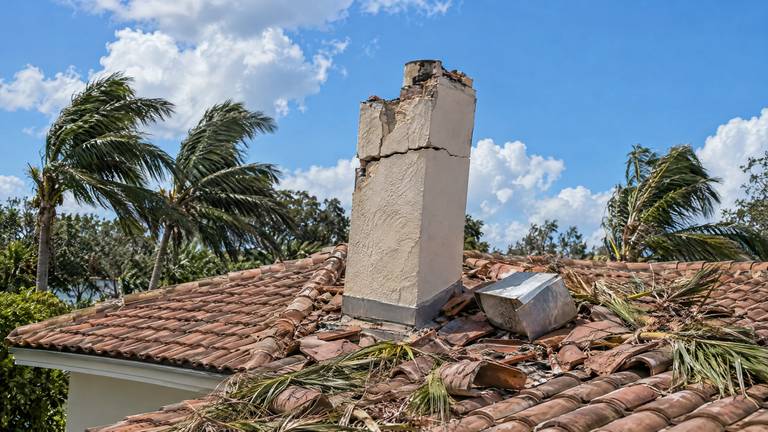
Chimney animal removal in Gibsonton, handled in the right order
We check the cap, the crown and the chase for the way in, then close it with parts that suit your Gibsonton chimney.
- Family owned and operated
- Same-day service available
- No hidden fees
- Workmanship warranty
Contents
Identifying the animal before anything is disturbed
The right response depends on what is in the chimney. A trapped squirrel, a raccoon with young, nesting chimney swifts and a bat colony each call for a different plan, and some of those plans are governed by law.
Tell us when the sounds happen, day or night, whether they come and go at particular times and anything you have seen at the chimney top. Our team uses that and a look at the fireplace and the top of the chimney to identify what we can before anything is moved.
You do not need to know the species before calling. Describing what you have heard and seen is enough to start, and nobody should climb onto the roof or look up the flue to find out.
Chimney swifts are protected by federal law
Chimney swifts build small nests of twigs glued to the inside wall of a chimney. The Migratory Bird Treaty Act protects them. As the U.S. Fish and Wildlife Service explains, the law forbids harassing, injuring or killing the birds, and the same goes for their eggs and nests.
That means an active swift nest stays where it is until the birds leave. We do not sweep, block or cap a chimney with nesting swifts inside. Our role is to confirm what is there and plan the cleaning and cap for after the season.
If you are unsure whether the birds are swifts, keep the fireplace closed and describe what you hear. Our team can help confirm the species before any decision about cleaning or capping is made.
A trapped bird is not always a nesting bird
Some birds fall into an open chimney and cannot fly back up the narrow flue. A trapped bird flutters, calls and moves around, while a nesting bird tends to stay put and may come and go through the top.
The difference matters because a trapped bird can often be let out through the fireplace with care, while an active nest of a protected species must be left alone. We identify which case you have before anything else happens.
A trapped bird that reaches the room can usually find its own way out through an open outside door once interior doors are closed. After that, the chimney top needs checking for the opening it used.
Finding the way in before closing it
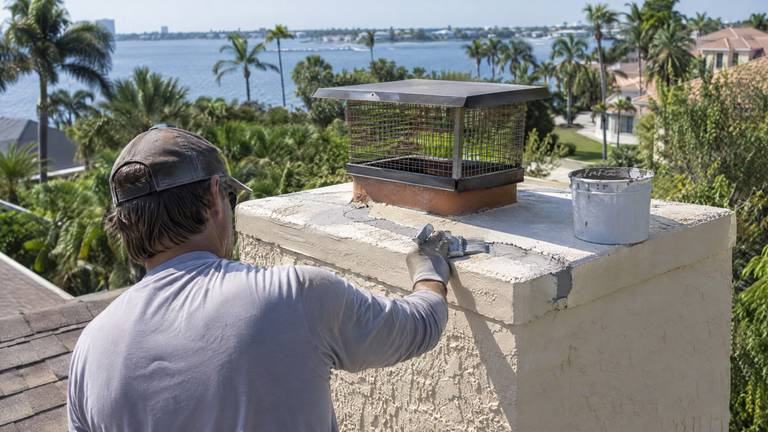
An uncapped flue is the obvious entry, but it is not the only one. A torn or rusted screen, a gap between the cap and the crown, a cracked crown or an opening in a chase cover or chase siding can each let animals in.
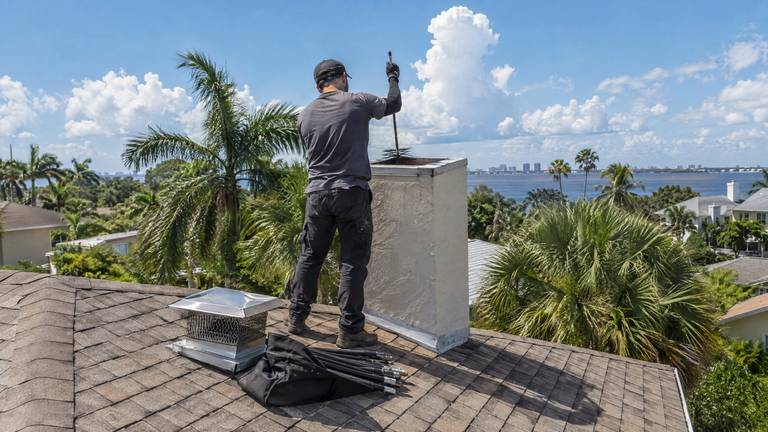
We check each possibility at the top of the chimney before recommending a fix. Closing one opening while another stays open only moves the problem.
- Missing or loose cap on the flue
- Torn, rusted or bent screen
- Gap between the cap and the crown
- Openings in a chase cover or chase siding
On any service we offer
Animal identified at the free inspection, then 72 hours to book at 10% off.
What's Included
Your Animal Removal Estimate in Gibsonton
- Coordinating with wildlife help where it is needed
- The entry point at the chimney top
- Screen openings and removability under the code
- Room protection during cleanup
Our Services
More Help for Your Gibsonton Fireplace
-
-
-
-
-
-


More about chimney animal removalEverything we do in Gibsonton

Proudly American
A clear scope, an agreed price and workmanship we stand behind.
Ask Us About the Animal in Your Chimney
Describe what you are hearing in your Gibsonton chimney when you call (833) 435-4697. The inspection is free, and the next step is explained before any work.
Your request is confirmed
Our team will contact you to arrange the appointment.