Careful chimney animal removal for homes in University
We explain the rules, arrange wildlife help where needed and fit a proper cap in University.
- Family owned and operated
- Same-day service available
- No hidden fees
- Workmanship warranty
Contents
Florida's rule on bats in chimneys
Florida's nuisance wildlife rule sets when bats may be excluded from a structure. Exclusion is not allowed during the maternity season in spring and summer, when young bats cannot yet fly and would be sealed inside.
If bats are using the chimney, the timing is fixed by that rule, not by convenience. We explain what applies to your home, and we do not cap or seal a chimney that bats are using until the exclusion has been done within the rule.
The restriction exists to protect young bats, and it applies to homeowners and contractors alike. Planning around it avoids harming the colony and avoids sealing bats inside a chimney.
Raccoons denning in a chimney
A raccoon may use the smoke shelf or the flue as a den, and in spring it may have young with it. Removing only the adult, or closing the top while the young are inside, leaves animals trapped in the chimney.
Florida's nuisance wildlife rule restricts where a live-captured animal may be released, which is one reason trapping belongs with someone who works within that rule. Once the raccoons are out, our team cleans the chimney, checks the damper and flue for damage and closes the top.
Raccoons can also tear screens and bend dampers while going in and out, so the chimney is checked for that damage before a new cap goes on.
A trapped bird is not always a nesting bird
Some birds fall into an open chimney and cannot fly back up the narrow flue. A trapped bird flutters, calls and moves around, while a nesting bird tends to stay put and may come and go through the top.
The difference matters because a trapped bird can often be let out through the fireplace with care, while an active nest of a protected species must be left alone. We identify which case you have before anything else happens.
A trapped bird that reaches the room can usually find its own way out through an open outside door once interior doors are closed. After that, the chimney top needs checking for the opening it used.
Animals inside a chimney chase
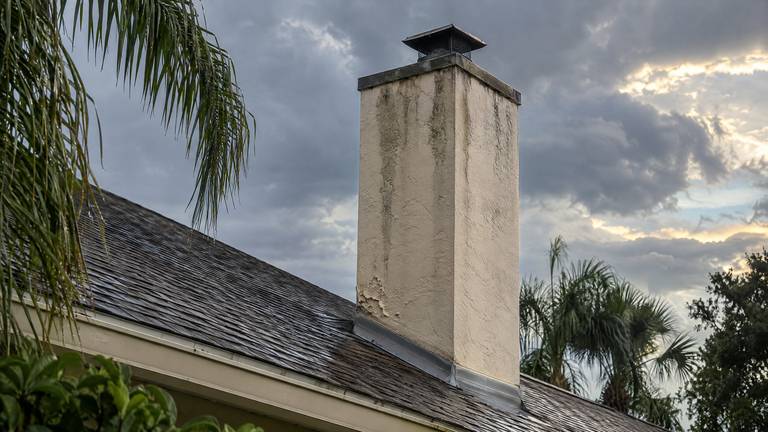
The framed chase around a factory-built chimney is a sheltered space, and animals can get in through rust holes in the chase cover, loose siding or gaps where the trim has pulled away. Sounds inside the wall beside the fireplace are the usual clue.
Once the animal has been dealt with, we repair the entry at the chase cover or siding and check that nothing was left against the chimney pipe inside the chase. Any framing repair is priced on its own line.
Animals in a chase can also disturb insulation or leave nesting material against the pipe, which is why the inside of the chase top is checked once the animal is out.
On any service we offer
In University, cleanup and capping booked within 72 hours of the visit are 10% off.
What's Included
Your Animal Removal Estimate in University
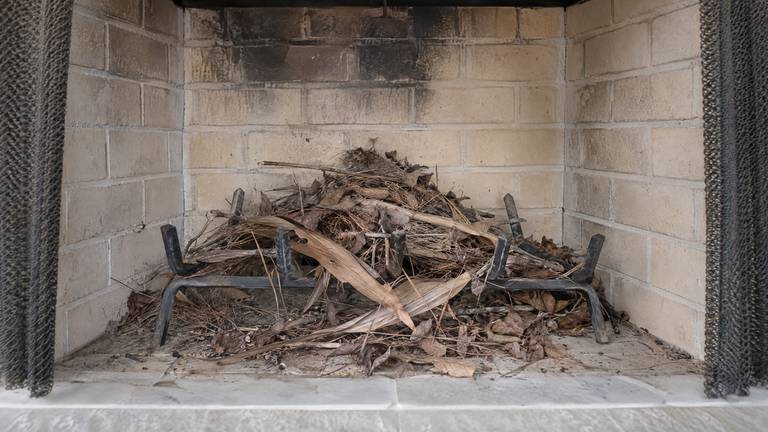
- Nest material, droppings and debris in the firebox
- Cap, screen and fit on each flue
- Cap style for the number of flues
- Any flue that vents an appliance
Our Services
More Help for Your University Fireplace
-
-
-
-
-
-


More about chimney animal removalEverything we do in University
Proudly American
A clear scope, an agreed price and workmanship we stand behind.
Close Your Chimney to Wildlife in University
Keep the fireplace closed, and we will inspect the chimney in University at no charge.
Your request is confirmed
Our team will contact you to arrange the appointment.