Water in the Fireplace After Rain: What to Record
The puddle may dry before the visit. Keep the observations that help explain how it appeared.
- Family owned and operated
- Same-day service available
- No hidden fees
- Workmanship warranty
Quick answer
Water in a fireplace after rain means the entry path needs assessment, even if the puddle disappears before the appointment. Record where the moisture appeared and when it followed the rain, without climbing onto the roof or dismantling the fireplace. Keep the affected unit unused until its condition and the appropriate next step have been assessed.
Contents
Save the sequence while it is still clear
A first wet patch can be easy to forget once the room looks dry. Write down when you noticed it, whether rain was still falling and where the water was visible. “The back of the opening looked wet after the overnight rain” is more helpful than “the roof leaks,” because the first statement preserves an observation while the second assumes the route.
If several people saw the problem at different times, combine those accounts. Someone may have noticed a drop before another person found a stain. Keep those times separate rather than creating one confident story from incomplete memories. This is ordinary household information, not a demand to monitor the fireplace through dangerous weather. Stay away from a damaged structure or any area where water reaches electrical equipment.
Describe the visible location without disturbing it
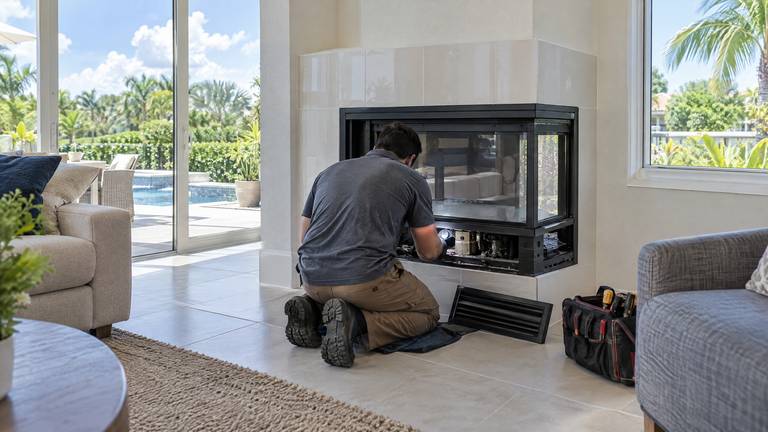
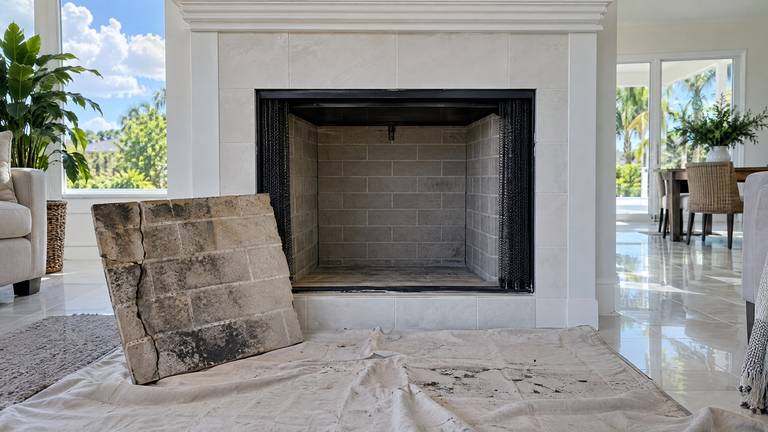
Water in the firebox may appear at the floor, on a lining surface or around an appliance fitted in the opening. Record only what you can see safely from the room. Do not remove a gas appliance front, probe a lining joint or reach into an opening to trace the water. A photograph you can safely take may help explain the location, but it does not establish the concealed route.
Do not light a fire or operate the heater to dry the assembly. A surface that looks dry later does not answer whether water reached a component or whether the source remains. Tell the technician about the wet condition even if there is no active dripping on the appointment day. The assessment should account for the event, not just the appearance at one later moment.
Separate the components at the top
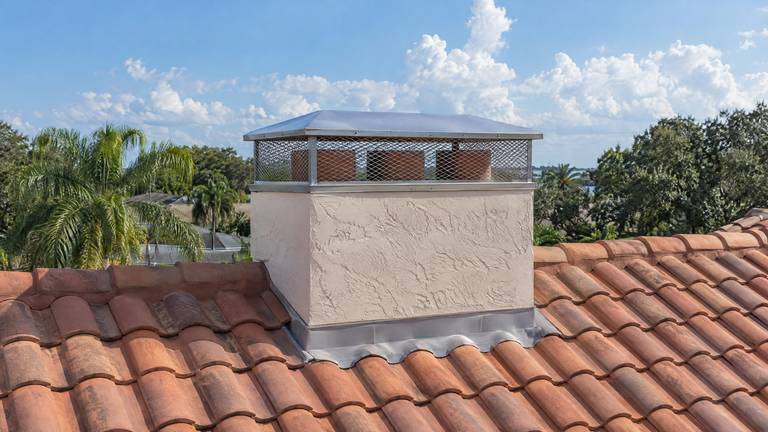
A rain cap over a flue, the sloping top of masonry and the flashing at the roof connection perform different tasks. Brick Industry Association Technical Note 19B treats these as separate details. Water seen below does not, by itself, identify which detail failed. Nor does seeing a cap from the ground establish that the rest of the assembly is sound.
The distinction matters when you discuss an estimate. If the proposal names a cap, ask whether it means the metal rain cover or work to the masonry top. If flashing is included, ask which roof connection is being addressed. You do not need to learn every trade term before booking, but the eventual scope should be clear enough that you know which component is being changed.
Useful details from the room
You can prepare a short note without doing an inspection yourself. Keep it near your appointment information so the person providing access can answer the same questions as the person who booked. Describe one incident at a time if water has appeared more than once; changing patterns can otherwise get lost in a broad statement that the fireplace is “always wet.”
Unanswered questions can stay unanswered. Guessing wind direction, measuring from the roof or opening a panel to complete a list is unnecessary. The purpose is to preserve safe observations and let the assessment determine what needs closer examination.
- Where was the first visible moisture, and where was it later?
- Was there water dripping in the fireplace or only a damp surface?
- Did a stain appear during the same event or remain from an older event?
- Had any chimney, roof or fireplace work recently been completed?
- Was the appliance in use before the water was noticed?
Avoid a temporary fix that hides the question
A household may be tempted to cover an opening or apply a sealant as soon as water appears. Do not alter a chimney outlet or appliance component without an appropriate plan. A change made before the assessment can obscure what was happening and create a separate issue that also needs to be understood. Tell the service provider about any measure that has already been taken.
The same care applies to the room finish. If the water has stained a visible surface, consider the source before repainting. Ask whether the proposed job addresses entry, damaged material, appearance or more than one of those. Keeping the tasks distinct avoids paying for a cosmetic result while assuming it resolves a water path that was never included in the work.
Ask what the repair is intended to prove
A dry-weather appointment can still be useful, but the proposal should explain its evidence and limits. Ask what was observed, which entry path is suspected or established and why the recommended work fits that finding. If several possible paths remain, the next step should be described rather than replaced with a blanket claim that one coating or cover will solve every leak.
Discuss how a recurring problem should be reported after the work. Record the repair date and the conditions of any later incident so a follow-up can compare like with like. Rain coming down a chimney is a description of the complaint, not proof that every later damp mark has the same cause. A useful record keeps the finding and the completed repair together.
Plan the appointment and the follow-up
When contacting our Tampa team, explain that the concern is water inside the fireplace, name the fuel type if known and mention any immediate access restriction. Our inspection is free. Proposed repairs are separate decisions, with the work and price explained before approval. If another contractor has recently worked on the property, have the relevant scope available without assuming their work caused the problem.
Keep the fireplace unused until the affected condition has been assessed and any required steps are complete. Ask for clear instructions about its return to use. If the assessment points to chimney cap replacement, the estimate should identify the actual part and fitting work. If it identifies another water path, the repair recommendation should follow that evidence instead.
Make your first service go further
Get 10% off your first service. Start with a free inspection and choose the work your fireplace needs.

Proudly American
A clear scope, an agreed price and workmanship we stand behind.
Our Services
Arrange the Relevant Service


Guides
Useful Answers Before the Visit
-
-
-
-


Put That Fireplace Problem on the Schedule
Arrange your free inspection in Tampa. We will help you understand the problem and the work it needs.
Your request is confirmed
Our team will contact you to arrange the appointment.